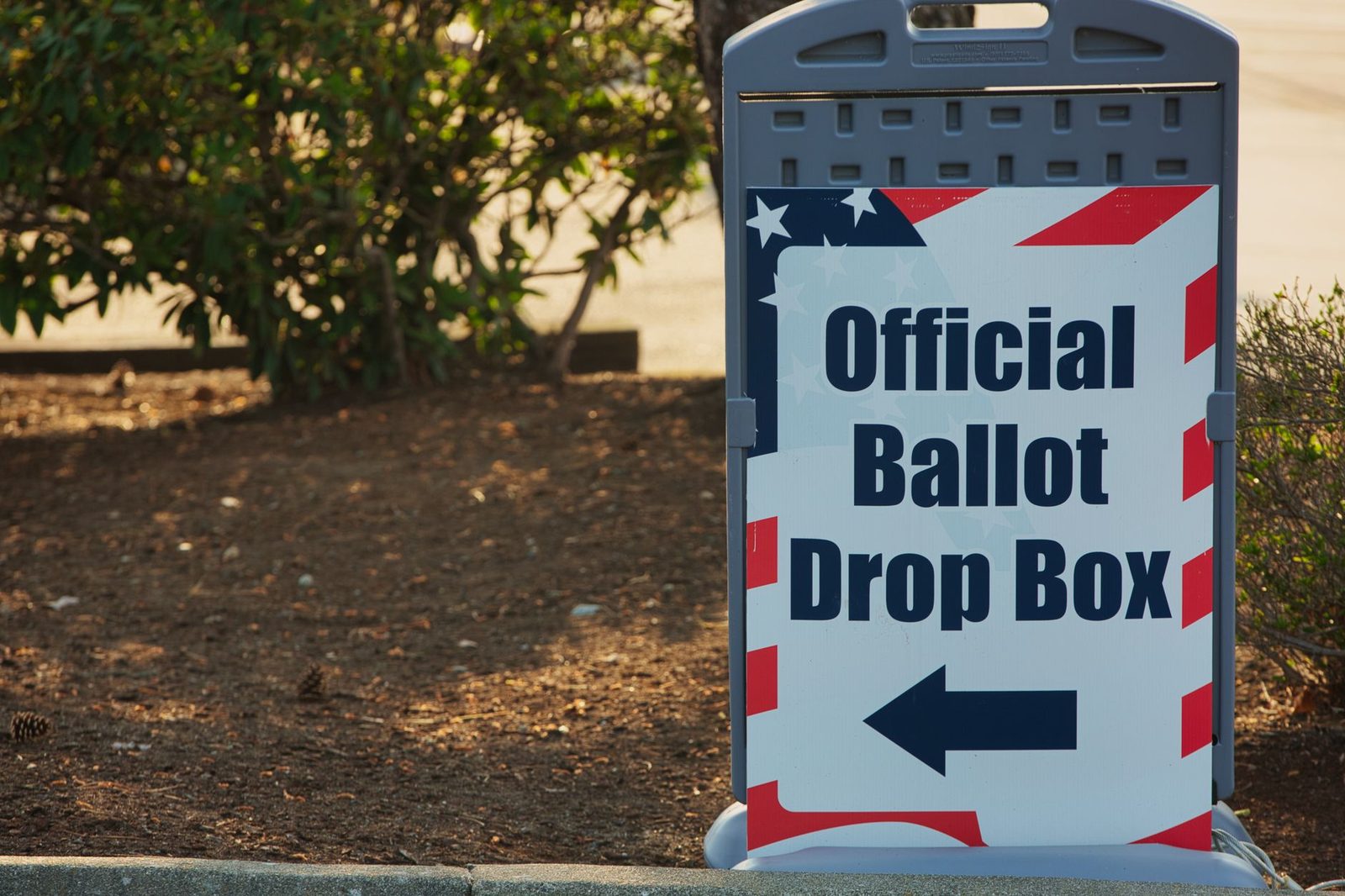
Elected school boards in most Virginia counties are on the ballot on Tuesday, November 2, 2027. The Virginia Department of Elections (ELECT) lists school board elections in 93 counties and 5 cities that year. Every school board candidate takes the same route: Virginia law says school board candidates "shall be nominated only by petition" (Va. Code § 22.1-57.3), so there is no party primary or party nomination for these seats.
To run, you must have lived in Virginia for the year before the election and be a registered voter who can vote for the seat. You collect signatures from qualified voters, starting on Friday, January 1, 2027. Most seats need 125 signatures, or 50 from an election district of 1,000 or fewer registered voters. You then file a Declaration of Candidacy and your petition pages with the general registrar of the county or city where you live, by 7:00 p.m. on Tuesday, June 15, 2027. That deadline is computed from state law, because ELECT had not posted its 2027 candidate bulletins when we checked, so confirm it with your general registrar.
For the full picture of a 2027 Virginia race, see our guide to running for local office in Virginia.
Step 1: Find out whether your school board is elected, and which seats are up
Not every Virginia school board is elected by the voters. A locality switches from an appointed board to an elected one by referendum, and the elected board then follows these rules (§ 22.1-57.3):
- Same calendar as the governing body. School board elections are held at the same time as the elections for the county board of supervisors or the city or town council, and members serve terms of the same length.
- Same districts. Where members are elected from districts, the school board districts match the governing body's districts, and the school board member and supervisor or council member for each district are generally elected at the same time.
- Staggered terms only if the governing body staggers. If your county elects half its board every two years, only some school board seats will be on the 2027 ballot.
- Terms begin January 1 after a November election.
Ask your general registrar which school board seats are on the 2027 ballot, which district you live in, and whether any seat is elected at large.
Step 2: Check that you qualify

Residency and registration. You must have been a resident of Virginia for the one year before the election and be qualified to vote for the office (§ 24.2-500). For a district seat, that means being registered at an address inside the district.
School employees. "No employee of a school board shall be eligible to serve on the board with whom he is employed" (§ 22.1-57.3). If you work for the school division, talk to your general registrar or an attorney before you file.
One office at a time. You may not appear on the ballot for more than one office at the same election (§ 24.2-504).
Step 3: Understand the petition route
Because school board candidates are nominated only by petition, every candidate files the same papers as an independent candidate, with the same deadline. A few consequences follow:
- No primary. School board candidates do not appear on the June 15 primary ballot. Your race is decided on November 2.
- No party label on the ballot. Virginia prints party names only for federal, statewide and General Assembly offices (§ 24.2-613), so school board candidates appear without a party label.
- A longer filing window. You may collect signatures and file from early January until 7:00 p.m. on June 15, 2027 (based on state law). Filing early leaves time to fix a problem.
Step 4: Collect your petition signatures

The minimum depends on the seat (§ 24.2-506):
| School board seat | Minimum signatures |
|---|---|
| County or city, at large or from a district of more than 1,000 registered voters | 125 |
| County or city, from an election district of 1,000 or fewer registered voters | 50 |
| Town of more than 3,500 registered voters | 125, or 25 from a ward or district |
| Town of 1,500 to 3,500 registered voters | 50, or 25 from a ward or district |
| Town of fewer than 1,500 registered voters | No petition required |
ELECT recommends collecting at least one and a half times the number required, because some signers turn out not to be qualified voters of the district. For a 125-signature seat, that is at least 188.
The petition itself has firm rules:
- The form. Use ELECT's Petition of Qualified Voters (form ELECT-506/521), printed front and back on one sheet. ELECT says a page whose back is on a second sheet is invalid. Fill in the candidate section before anyone signs.
- The signers. Each signer must be a registered voter who can vote for the seat. They print their name, sign, and write their full residence address and the date, which must be on or after January 1, 2027.
- The circulator. The person who collects the signatures must witness every one and may not be a minor or a felon whose voting rights have not been restored. ELECT adds that the circulator must be a legal resident of the United States.
- The notary. The circulator signs the affidavit on the back of each page in front of a notary. A page without a proper notarization is invalid.
For a full walkthrough, including how to check pages before filing, see the Virginia candidate petition guide on Beacon, our canvassing app's site.
Step 5: File with the general registrar
School board candidates file these papers with the general registrar of the county or city where they live:
- Certificate of Candidate Qualification (form ELECT-501(4)), a sworn statement that you are qualified to vote for and hold the office (§ 24.2-501). ELECT says it may be filed any time after January 1.
- Statement of Economic Interests, if your county, city or town has more than 3,500 people. Since July 1, 2026, it is filed electronically with the Virginia Conflict of Interest and Ethics Advisory Council (§ 24.2-502).
- Declaration of Candidacy (form ELECT-505/520), signed before a notary or before two witnesses who are registered voters of the district.
- Petition pages. The first page goes in with the declaration, and more pages may follow until the deadline.
All are due by 7:00 p.m. on Tuesday, June 15, 2027 (based on state law; §§ 24.2-503, 24.2-507). ELECT says declarations and petition pages must be received by the deadline, and a postmark does not count. Check with the Department of Elections for any other filings that apply to your campaign.
Two protections for independent filers. You may ask the general registrar in writing to tell you about problems in your papers that can still be corrected before the deadline (§ 24.2-505), although ELECT notes that it cannot guarantee a timely answer. And if the registrar finds that your petition is short of the minimum, you may appeal to the local electoral board within five calendar days of the notice (§ 24.2-506).
Step 6: Run the campaign to November 2

A school board race usually turns on parents, grandparents, teachers and neighbors who care about the schools. Most of the work is meeting them at their doors, at school events where campaigning is allowed, and at candidate forums.
Your petition drive is the first round of that work. Every signature comes from a registered voter of the district, and many signers will remember you in the fall. After you file, plan the remaining months around these dates (all based on state law):
- Mid-September: early in-person voting begins about 45 days before the election (§ 24.2-701.1). Confirm the first day with your general registrar.
- Friday, October 22, 2027: the last day to register to vote, and the 5:00 p.m. deadline to apply for a ballot by mail. ELECT says voters may still register in person after the deadline and vote a provisional ballot.
- Saturday, October 30, 2027, 5:00 p.m.: early in-person voting ends.
- Tuesday, November 2, 2027: election day, with polls open from 6:00 a.m. to 7:00 p.m.
As an example only, if you and two volunteers each knock on 40 doors a week from the end of August to the end of October, about nine weeks, you would reach about 1,000 doors. Set your own numbers from the size of your district.
Step 7: Keep parents and supporters informed by text
Texting works well in a school board race, as long as you text only people who asked to hear from you. Set it up in CampaignCNX+ over the summer.
- Settle your committee first. Campaign Verify, the check that confirms to the carriers (the mobile phone companies) that a political sender is a real campaign, needs a 527 committee (the federal tax status of a political committee), an EIN (the committee's federal tax ID number) and a filing with an election authority that is published online. Check with the Department of Elections for the filings that apply to your campaign and confirm that yours can be viewed online. If it cannot, ask Campaign Verify Support before you request. It costs $95, a request made on or after Sunday, November 15, 2026 lasts until January 31, 2029, and Campaign Verify decides eligibility.
- Open your account. CampaignCNX+ files your carrier registration, as 10DLC (the registration for texting from a standard local-style number) or toll-free, and files your Campaign Verify token with it.
- Collect permission in writing. A petition signature is not permission to text. Bring a separate sign-up sheet that plainly says the person agrees to receive campaign texts, with a dated line. Never text a school directory, a parent group's list or a voter list.
- Schedule a reminder for early voting:
Hi [First name], it's [Name], running for School Board. Early voting is open at the registrar's office until Sat, Oct 30. Reply STOP to opt out.
Texts send only between 8 a.m. and 9 p.m. in the recipient's time zone, and STOP replies are handled automatically. 100 free SMS included. Your number is $5 a month. For more wording, see our campaign text templates for local races. Every 2027 date is in our Virginia 2027 election calendar, and our political texting page covers campaign texting in general.
Begin with the form and a notary

Confirm that your seat is on the 2027 ballot, print the petition form, and line up a notary for your circulators before January 1. When you are ready to keep supporters informed by text, start a CampaignCNX+ trial.