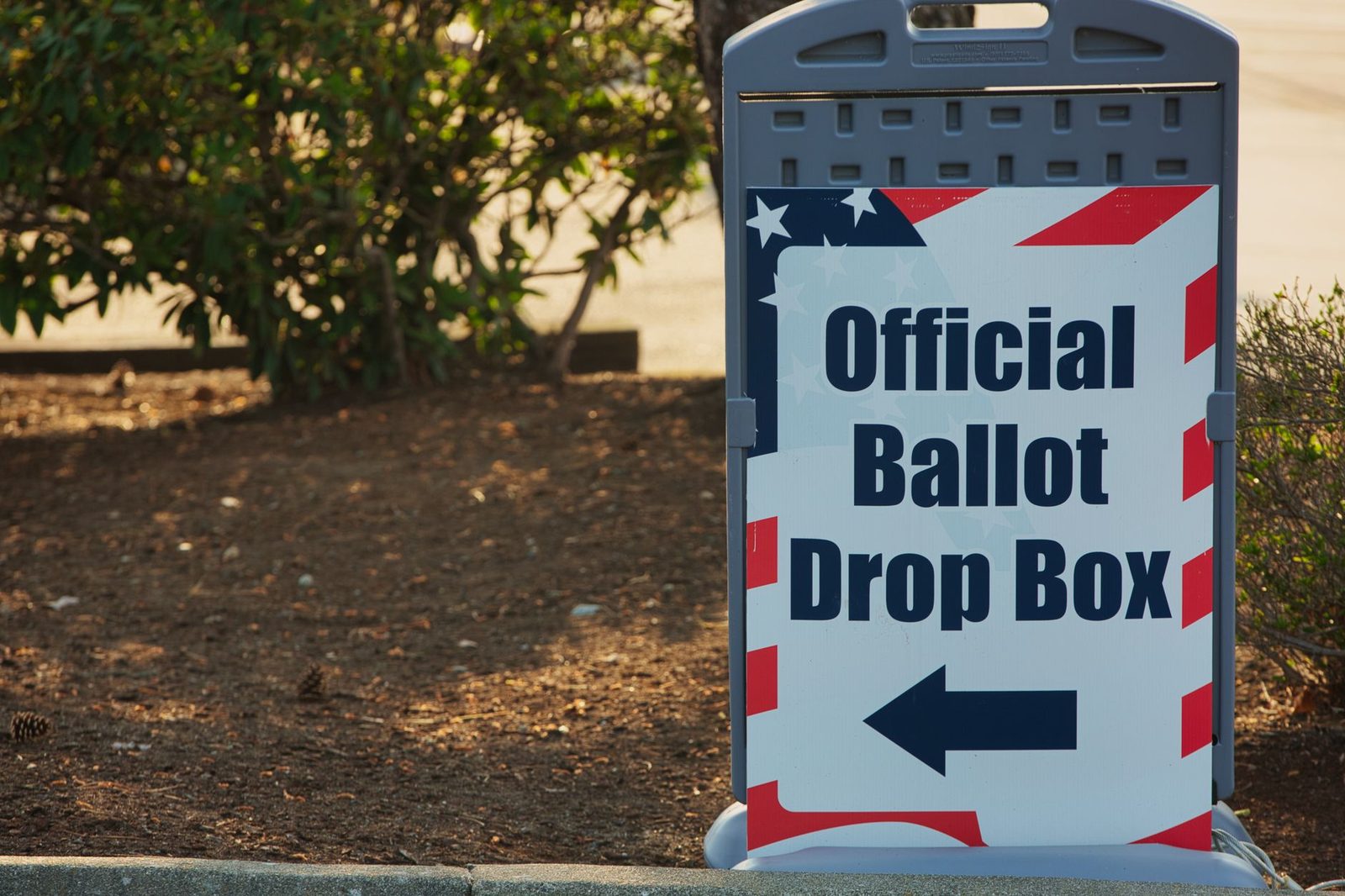
Most Virginia counties elect their board of supervisors on Tuesday, November 2, 2027. The Virginia Department of Elections (ELECT) lists supervisor elections in 94 counties that year, plus the Arlington County Board. Supervisors are elected by the voters of each county election district for four-year terms (Va. Code § 24.2-218). To run, you must have lived in Virginia for the year before the election and be a registered voter of the district you want to represent.
You then take one of three routes. As a candidate in a party primary, you file a Declaration of Candidacy and a petition of 125 qualified voters with the local party chair between noon on Monday, March 15 and 5:00 p.m. on Thursday, April 1, 2027, and the primary is on Tuesday, June 15. As the nominee of a party-run process, such as a convention, you file no petition. As an independent, you file a declaration and a petition with the general registrar by 7:00 p.m. on Tuesday, June 15, 2027. The filing dates are computed from state law because ELECT had not posted its 2027 candidate bulletins when we checked, so confirm them with your general registrar.
For the full picture of a 2027 Virginia race, including the other offices on the ballot, see our guide to running for local office in Virginia.
Step 1: Learn how your board is elected
Virginia law sets the default, and each county's ordinances fill in the details.
- Districts. The qualified voters of each county election district elect one or more supervisors (§ 24.2-218). Where a county requires supervisors to live in their districts, each district's member is elected only by that district's voters, not by the whole county.
- Four-year terms, with an option to stagger. The default is that all supervisors are elected together every four years, which puts most counties on the 2027 ballot. A county may instead elect half of its board every two years, for staggered four-year terms (§ 24.2-219). In a staggered county, only some districts vote in 2027.
- An elected chair in some counties. Where the whole county elects the chair of the board, that office has its own four-year schedule (§ 24.2-219).
Before you decide, ask your general registrar three questions: which seats are on the 2027 ballot, which district your home is in, and whether your county elects its chair at large.
Step 2: Check that you qualify
How a new number gets approved
- Open your account100 free SMS included
- Buy your number$5 a month. Nothing sends until the account has one.
- Verify your campaignCampaign Verify, $95 per two-year cycle. Needs your committee's EIN and filing.
- We file the registrationToll-free verification, or 10DLC for a local number ($75 one time)
- The carriers review itAbout three business days for a toll-free number
- Send your first textStart with a small test group
Residency and registration. Every candidate in Virginia must have been a resident of the Commonwealth for the one year before the election and be qualified to vote for the office (§ 24.2-500). For a district seat, that means being registered to vote at an address inside the district. The Constitution of Virginia allows local governing bodies to set stricter district residence rules (Article II, Section 5), so ask your general registrar whether your county has one.
One office at a time. You may not appear on the ballot for more than one office at the same election (§ 24.2-504).
Step 3: Choose your route onto the ballot
Through a party primary
Each party's county committee decides how it will choose its nominee for each seat (§ 24.2-509), and reports a primary to ELECT by Tuesday, March 2, 2027 (based on state law). A party whose last nominee for the seat won after a primary must use a primary again unless all its incumbents for the office agree otherwise. If you want a party's nomination, Democratic or Republican, ask that party's county chair which method it chose.
A primary candidate files a Declaration of Candidacy, a petition and a filing fee receipt with the party chair of the locality where they live. The fee is 2 percent of one year's minimum salary for the office, paid to your county treasurer or director of finance (§§ 24.2-523, 24.2-524).
Through a nomination the party runs itself

A party may instead nominate by a method it runs itself, such as a convention. These nominations may be made only within the 47 days before the primary date, so between Thursday, April 29 and 7:00 p.m. on Tuesday, June 15, 2027 (based on state law; § 24.2-510). The candidate files no declaration or petition, and the party chair certifies the nominee (§ 24.2-511). Ask the county party committee what its process requires.
As an independent
Any candidate who is not a party nominee files a Declaration of Candidacy and a petition with the general registrar of the county or city where they live, by 7:00 p.m. on Tuesday, June 15, 2027 (based on state law; §§ 24.2-505, 24.2-507). Independent candidates do not run in the primary and go straight to the November ballot.
Whatever route you take, the ballot will not show a party label beside your name. Virginia prints party names only for federal, statewide and General Assembly offices (§ 24.2-613).
Step 4: Collect your petition signatures
Primary and independent candidates for a county governing body need at least 125 signatures of qualified voters. If you are running from an election district, not at large, that contains 1,000 or fewer registered voters, you need 50 (§§ 24.2-506, 24.2-521). Each signer must be a registered voter who can vote for the seat, which for a district seat means a voter who lives in that district.
The rules for the petition are strict:
- Use ELECT's Petition of Qualified Voters (form ELECT-506/521), printed front and back on one sheet, with the candidate section completed before anyone signs.
- Collect signatures dated on or after Friday, January 1, 2027.
- Each signer gives a printed name, signature, full residence address and the date. The last four digits of a Social Security number are optional.
- The circulator, the person who collects the signatures, witnesses every signature and signs an affidavit on each page in front of a notary. A circulator may not be a minor or a felon whose voting rights have not been restored.
ELECT recommends collecting at least one and a half times the number required, because some signers turn out not to be qualified voters of the district. For a 125-signature seat, that is at least 188 signatures. For a full walkthrough of the form, see the Virginia candidate petition guide on Beacon, our canvassing app's site.
Step 5: File your papers

File with the right office, and file early.
| What | Primary candidates | Independent candidates |
|---|---|---|
| Certificate of Candidate Qualification | General registrar, by 5:00 p.m. Thursday, April 1 | General registrar, by 7:00 p.m. Tuesday, June 15 |
| Statement of Economic Interests, if required | Filed electronically, by April 1 | Filed electronically, by June 15 |
| Primary filing fee | Treasurer or director of finance | Not required |
| Declaration of Candidacy, petitions, fee receipt | Party chair, noon March 15 to 5:00 p.m. April 1 | General registrar, by 7:00 p.m. June 15 |
All 2027 dates in the table are based on state law. The Statement of Economic Interests is required of governing body candidates in a county of more than 3,500 people, and since July 1, 2026 it is filed electronically with the Virginia Conflict of Interest and Ethics Advisory Council (§ 24.2-502). A party-run nominee files the certificate and, where required, the statement by June 15.
ELECT says declarations and petition pages must be received by the deadline, and a postmark does not count. The first petition page goes in with your declaration, and later pages may follow. An independent may ask the general registrar in writing about problems that can still be corrected before the deadline (§ 24.2-505). Check with the Department of Elections for any other filings that apply to your campaign.
Step 6: Run the campaign for your district
A district seat is a neighborhood campaign, and most of the work is meeting voters at their doors. Ask your general registrar how to obtain a list of registered voters for your district; ELECT notes that you must file your Certificate of Candidate Qualification before you can buy one.
For a primary candidate, the race to watch is June 15; for an independent, November 2. Early in-person voting begins about 45 days before each. Registration closes on Friday, June 4 for the primary and Friday, October 22 for November, and early voting ends at 5:00 p.m. on Saturday, June 12 and Saturday, October 30 (all based on state law).
As an example only, a candidate and three volunteers who each knock on 40 doors a week for twelve weeks would reach about 1,900 doors. Your petition drive counts as the first round.
Step 7: Keep supporters informed by text
A short text at the right moment tells supporters when early voting opens and when to vote. Set it up in CampaignCNX+ before the busy weeks.
- Settle your committee first. Campaign Verify, a check that confirms to the carriers (the mobile phone companies) that you are a real campaign, needs a 527 committee (the federal tax status of a political committee), an EIN (the committee's federal tax ID number) and a filing with an election authority that is published online. Check with the Department of Elections for the filings that apply to your campaign, and confirm that yours can be viewed online before you request; if it cannot, ask Campaign Verify Support. It costs $95, a request made on or after Sunday, November 15, 2026 lasts until January 31, 2029, and Campaign Verify decides eligibility.
- Open your account. CampaignCNX+ files your carrier registration for you, as 10DLC (the registration for texting from a standard local-style number) or as toll-free, and files your Campaign Verify token with it.
- Add only supporters who agreed in writing. Use a dated sign-up sheet that plainly says the person agrees to receive campaign texts. Your petition is not that sheet. In CampaignCNX+, put these supporters in a group and record the consent date in a custom field.
- Schedule your reminders. Use the first-name merge field and end the first message with the opt-out line:
Hi [First name], this is [Name], candidate for [District] Supervisor. Early voting is open at the registrar's office. Reply STOP to opt out.
Texts send only between 8 a.m. and 9 p.m. in the recipient's time zone, and STOP replies are handled automatically. 100 free SMS included. Your number is $5 a month. For more wording, see our campaign text templates for local races, and for every 2027 date in order, see our Virginia 2027 election calendar. Our political texting page covers campaign texting in general.
Start with your district and your route

Confirm your district, ask your party chair how the party will nominate or decide to run as an independent, and print the petition form before January 1. When you are ready to keep supporters informed by text, start a CampaignCNX+ trial.