SMS marketing for restaurants
Most restaurants already rely on texting, but it usually happens through the manager's personal phone and a mix of reservation-platform emails. CampaignCNX+ gives the dining room one dedicated number for SMS (text message) marketing, including daily specials, reservation confirmations, table-ready alerts, and messages to the VIP regulars who keep coming back.
What restaurants send
The front-of-house team runs all three text-message programs. The platform keeps them separate when you write messages and combines them in reporting.
01 | Daily specials and happy hour
If you operate more than one location, sort the list by location. Schedule the message for 4 p.m., when people are thinking about dinner. The platform shows the cost before you send. For example, a 1,200-person list at $0.06/SMS costs $72, and the extra tables it fills usually cover that.
02 | Reservation and table-ready alerts
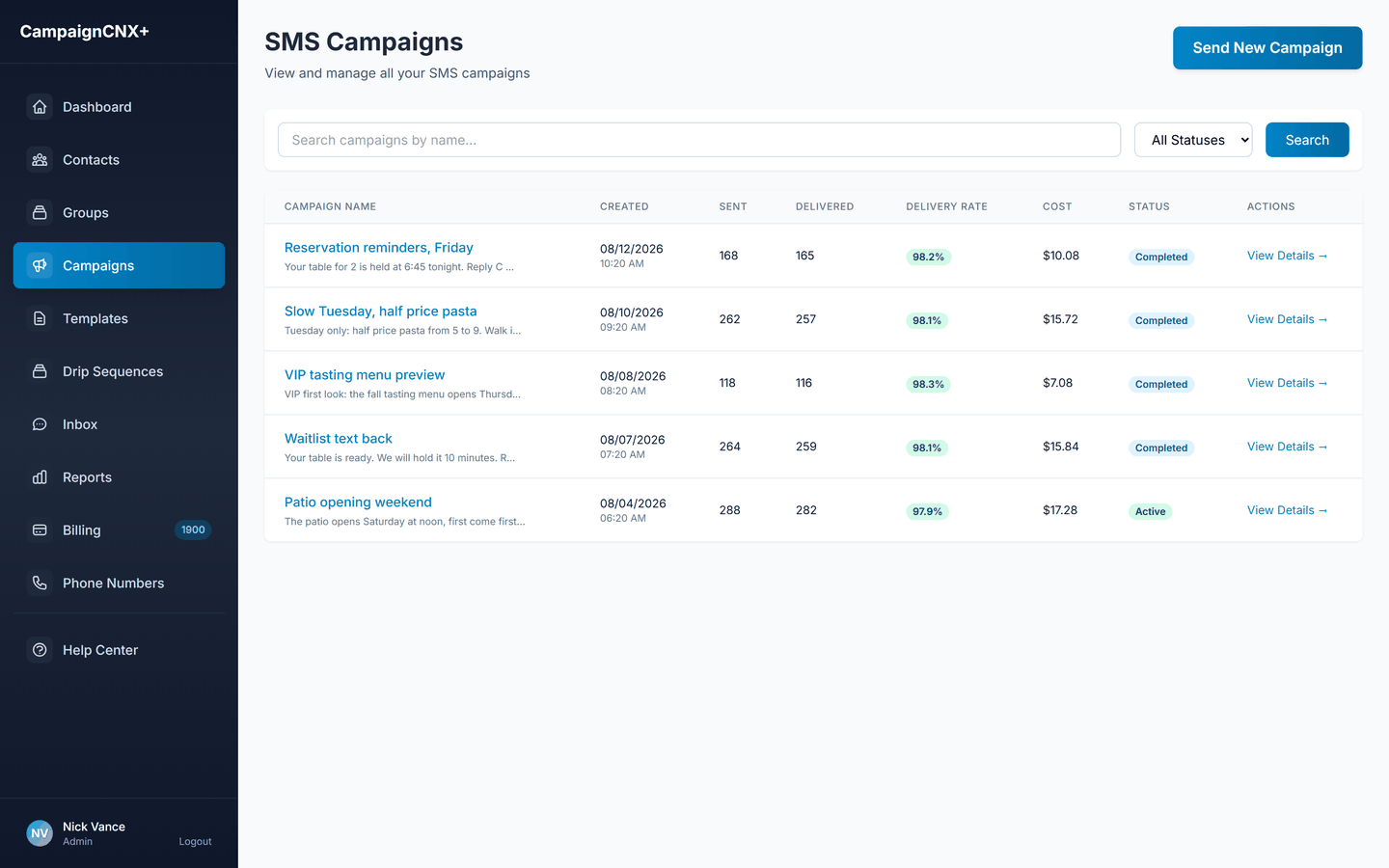
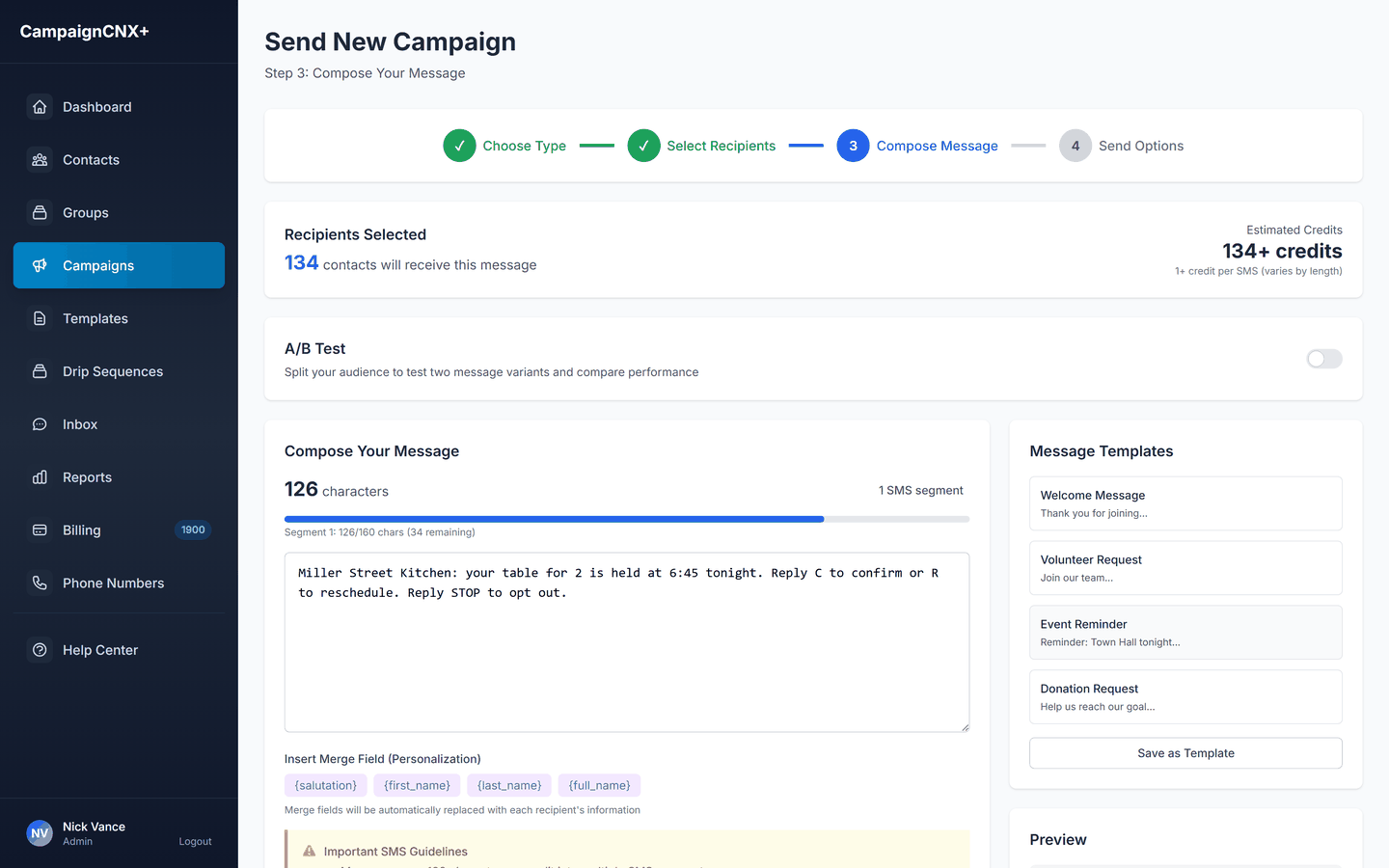
Reservation reminders sent on the day reduce no-shows, and table-ready alerts to the waitlist reduce crowding at the host stand. Guests reply C to confirm or M to change the reservation, and replies arrive in the two-way inbox the manager checks during service.
03 | VIP list and loyalty
Tag your regulars as VIP, and birthday texts offering a free dessert go out on schedule. Early-access invitations for a new menu or a wine-pairing night go only to contacts tagged VIP. Lapsed customers (no visit in 60 days) receive a separate message inviting them back.
From independent kitchens to multi-unit groups
A single restaurant can run the full SMS program from one phone number, while groups with several locations use a separate number for each restaurant, all on one billing account. If your venue is a late-night bar or a club rather than a dining room, the bar and nightclub SMS marketing page covers guest lists, DJ and event nights, and bottle service instead.
The chef-owner or general manager runs the whole SMS program on a single number, sending daily specials, reservation reminders, and VIP texts from one account on the office laptop.
A separate number for each location keeps the VIP lists apart. One corporate marketing user can send messages for the whole brand across all locations. Reports show results by location and in total.
TCPA compliance for restaurant SMS
/01
Run an optional check against the federal Do Not Call (DNC) registry when you import contacts. Most restaurant lists are regulars who opted in (agreed to receive your texts), but the check costs little and protects you.
/02
We remove opted-out contacts from every send, and the composer checks your STOP language before it lets you leave the review step.
/03
Carrier approval of a toll-free number takes about 3 business days, and we file the request for you. The carriers (the phone companies, such as AT&T, Verizon and T-Mobile) review your 10DLC registration at the same time, and you can send from your toll-free number while they do. We recommend 10DLC for any restaurant that sends weekly.
/04
Sending hours follow each guest's time zone, so no one receives a brunch reminder at 6 a.m.
Restaurant SMS FAQ
Yes. A common approach is a QR code at the host stand or on the check that guests scan to text a keyword to your number. The platform supports inbound keyword opt-ins as an add-on ($20/mo). Customers text JOIN to your number, and they are added to the list with their consent recorded. You can also import a list from your reservation platform if your booking process collects SMS consent.
No, it works alongside them. Reservation platforms handle booking, and CampaignCNX+ handles marketing and the messages a manager sends on the day of service, which reservation platforms do not handle well.
Yes. Tag contacts by location when you import them, then write one message addressed to "all locations" or choose only some locations. Corporate marketing runs on a single account, with a separate number for each location for local messages.
The platform supports MMS (picture messages). An MMS uses 3 message credits, so it costs $0.18 on pay-as-you-go, $0.165 on Basic, $0.135 on Pro and $0.105 on Enterprise. Most operators use MMS for the main photo of a weekly special and use plain SMS for everything else.
A 1,000-person list with two SMS sends a week is about 8,000 messages a month. That costs about $480 a month on pay-as-you-go, or about $360 on Pro: $225 for the plan, which includes 5,000 SMS, plus 3,000 more at $0.045 each. Your number is $5 a month on either. Pro costs less than pay-as-you-go once you send more than about 3,750 messages a month.
Yes. The trial includes 100 free SMS, and your number is $5 a month. That is enough to test a menu-launch template on the staff list before you send to guests.
Start sending
The fastest way to start is with a toll-free number. Purchase a phone number and import your guest list. After carrier verification, which usually takes about three business days, you can send a daily special or a reservation reminder. For restaurants planning a regular SMS program (weekly specials, loyalty offers, recurring reservations), we recommend 10DLC carrier registration. You can send from your toll-free number while the carriers review it.
