Mass texting service
Import a CSV file, write one text message with merge fields (placeholders that fill in each person's details), and send it to everyone on the list who should get it. Opt-outs are removed automatically, the total cost is shown before you send, and delivery status updates in real time. The process is the same whether your list has 200 contacts or 40,000.
01: Compose
Place a merge field where the first name goes, and write the rest of the message the way you would write it to one person. The bulk-SMS composer shows the segment count (each 160-character piece of a text is billed as one message) and the total cost as you type, so you know the cost before anything goes out.
First, decide whether SMS is the right channel for the message, as discussed in SMS versus email marketing.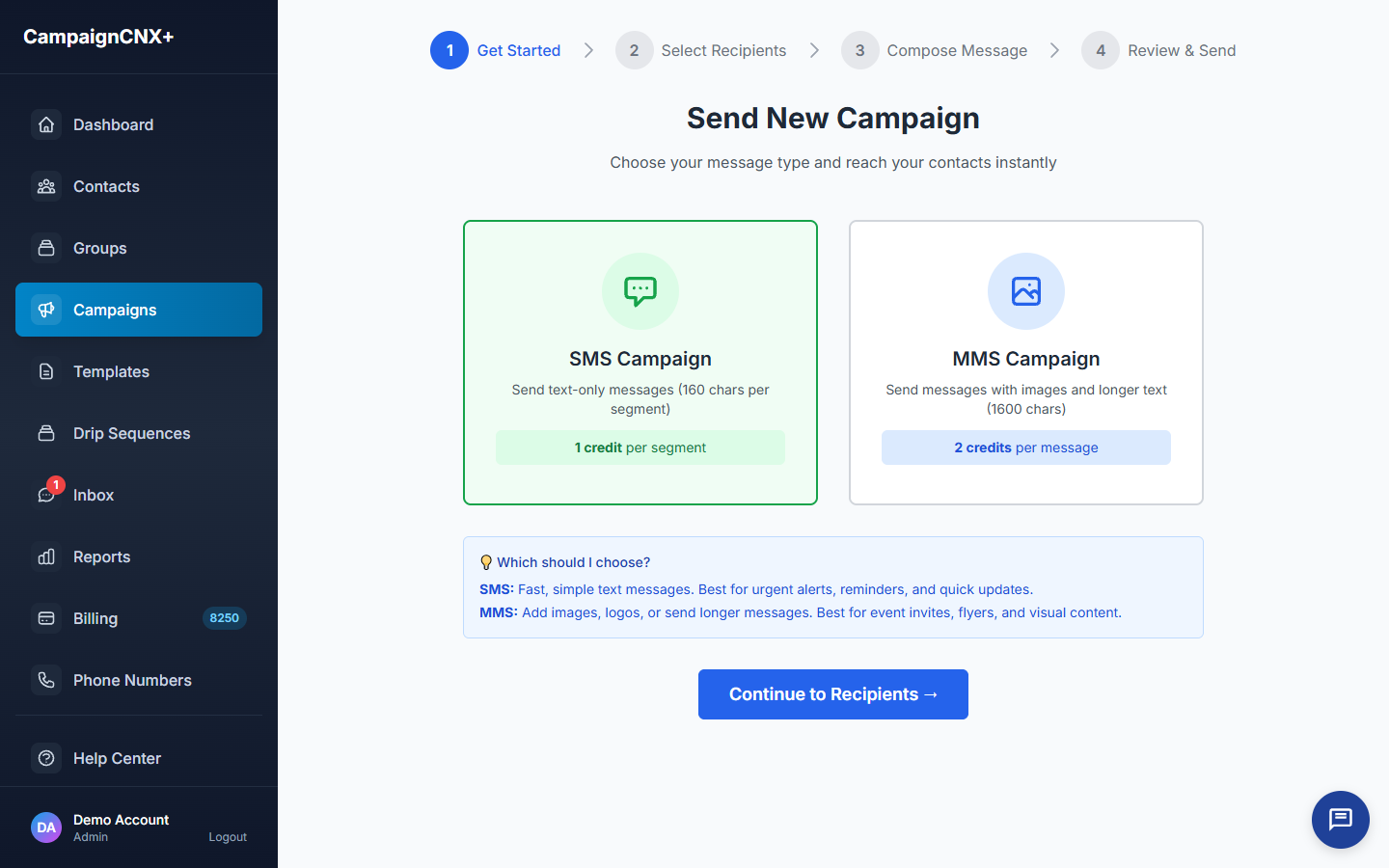
02 | Review and send
The review screen is a single panel that shows your final recipient count, the total cost in dollars, and what the personalized message will actually look like to one real contact. You can send immediately or schedule it for a future date, and nothing leaves the platform until you confirm. If you are not sure a text broadcast is the right channel for the message, see SMS versus email marketing.
Reminder programs depend on scheduled messages, and reminders are the most profitable use of a customer list, as explained in SMS appointment reminders.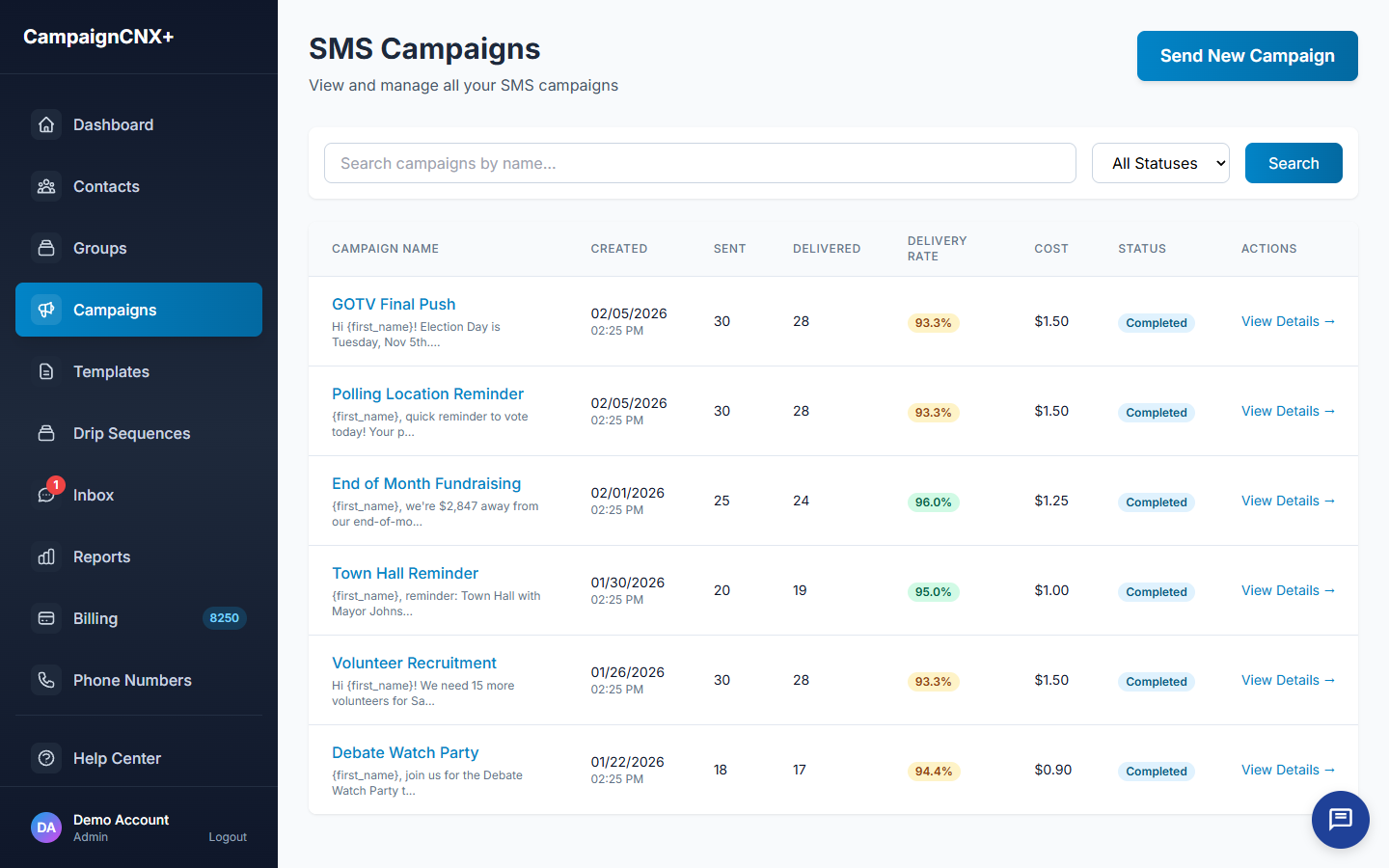
How mass texting works
There is no separate process for large lists and no hidden enterprise pricing page. You build a broadcast to a 40,000-contact list the same way you build one to a 200-contact list.
A fuller walkthrough of that process, with the decisions at each step, is in how to send mass text messages to customers.Choose SMS or MMS, and the cost per segment appears right away so you know what the campaign will cost.
Choose a group, a tag, or a filter. We remove opt-outs automatically, and DNC-flagged contacts are removed too.
Add merge fields and MMS attachments while the segment count updates live. We check for STOP language before the message is sent.
Check the final recipient count, total cost, and a one-contact preview, then send immediately or schedule it.
TCPA compliance on every message
/01
Anyone who texted STOP, UNSUBSCRIBE or another opt-out word is already out of the recipient count before you review.
How to set up the keyword handling behind this, and the automatic replies that go with it, is covered in SMS automation, autoresponders, and keywords./02
Check a list against the federal DNC registry through DataZapp, and pay only for the numbers you verify.
/03
We enforce quiet hours automatically based on each contact's time zone, so a scheduling mistake cannot send a text at 3 a.m.
/04
The phone carriers (such as AT&T, Verizon and T-Mobile) verify a new toll-free number in about three business days. For long-term programs, we submit 10DLC registration (for a registered local number) at the same time, and you can send from the toll-free number during that review.
Who uses mass texting
The same four steps work for a precinct-level GOTV (get-out-the-vote) message and for a regional retail flash sale. The audience and the message change, but the four-step mass-texting process stays the same.
Send to a voter file, a donor list, and a volunteer roster with the same bulk-SMS tools on a single account.
Nonprofits and churches do something similar with different limits and a different request, as described in SMS marketing for nonprofits and churches.For giving by text, text to give for churches and nonprofits explains how a keyword leads a supporter to your giving page, and fundraising text message examples offers appeals, thank-you messages and volunteer requests to adapt.
Storefronts, service businesses, and loyalty programs use the same bulk-SMS broadcast tool as the political side of the platform.
If you are looking for the specific things worth sending, there are fifteen of them in SMS marketing ideas for small business.
If your business is new to texting, business text messaging explains how it works and what it costs. Real estate agents and teams will find lead follow-up, showing reminders and listing alerts in real estate text messaging.
Before you send, the SMS character counter shows how many segments a message will use, and SMS vs MMS explains when a picture message is worth three times the price of a text.
What drives the number
The price per message is what most people compare, but it is the smaller part of the cost. What changes a bulk SMS bill most is the number of segments and the size of the list, and only one of those is obvious.
A single SMS segment is 160 characters. If a message is one character longer, it splits into two segments billed separately, at 153 characters each, because the standard uses the difference to join the parts back together on the phone. So a 161-character message costs double a 160-character one. Anything that makes a message longer without your noticing can push it over, such as a long merge field, an emoji, or a link that was not shortened.
Emoji deserve a specific warning. A single emoji switches the whole message to a different character encoding, which cuts the limit per segment from 160 characters to 70. One smiling face can turn a one-segment message into three. This is why the composer shows the live segment count as you type.
A texting list loses value over time, and faster than most owners expect. People change numbers, carriers reassign old numbers, and interest that was real at opt-in fades. None of that is visible from the list itself, which still shows the same count it showed a year ago.
In practice, a list you have not messaged in six months is worth less than its size suggests. Sending to it without warning leads to higher opt-out rates, more carrier filtering, and a significant share of messages reaching people who no longer recognize you. The first send after a long silence is the most expensive one you will make, in reputation as well as money.
Programs that last treat a regular sending schedule as maintenance, not pressure:
This topic appears on a mass texting page rather than a compliance page because it is mainly about cost, not law. Texting people who no longer want to hear from you is the most expensive thing a bulk SMS program can do, long before anybody complains.
Sent is not the same as delivered
After a bulk send, the platform reports that the message went out. That report means the carrier accepted it, which is not the same as a phone displaying it. Carriers filter heavily and without notice, and they are not required to explain why. Understanding the few things that trigger filtering is worth more than any amount of rewording the message.
In practice, whether your messages reach people's phones depends mostly on what you do before the send, not on fixes afterward. Register the number, increase its volume gradually, keep the list current, and use a link domain you control. A program doing those four things rarely has a filtering problem worth investigating.
When delivery does drop, look at what changed rather than at the message. A new number, a new link shortener, a group of contacts that had not been messaged in a long time, or a first send after a long gap will explain most sudden drops. The wording is almost never the cause, which is why rewriting it almost never helps.
Most bulk SMS reports lead with the number of messages sent, which is the least useful figure. It measures how much you spent, not what happened. Four other numbers tell you whether the send worked.
Read these numbers together. A high click rate with a poor delivery rate means a small audience is responding well. That is a different problem from a large audience ignoring you, and the two call for opposite responses.
Mass texting FAQ
A text blast is another name for a mass text: one message sent to many people at once, such as a sale announcement to a customer list or a rally reminder to volunteers. On CampaignCNX+ it goes out from your registered number, with STOP handling and quiet hours applied to every recipient.
There is no hard cap on how many contacts you can include in a single campaign. Your plan's included SMS count determines what is covered and what shows as overage, but the platform itself does not limit the speed of the send.
Pay-as-you-go is $0.06 per SMS and $0.18 per MMS. Monthly plans bundle SMS at lower effective rates: Basic $55/mo (1,000 SMS, ~$0.055), Pro $225/mo (5,000 SMS, ~$0.045), Enterprise $695/mo (20,000 SMS, ~$0.035). Overage bills at the plan's own rate, not the pay-as-you-go rate.
Yes, you can schedule a campaign days or weeks ahead. Scheduled campaigns respect each recipient's time zone, so a message scheduled for 10 a.m. doesn't arrive at 7 a.m. for someone in a different time zone.
We filter out anyone who replied STOP, UNSUBSCRIBE or another opt-out word before the recipient count is locked in. This happens across the whole platform, whether or not two-way messaging is enabled.
A new toll-free number clears carrier verification in about three business days. 10DLC registration (for a local number registered with the carriers) is the recommended path for high-volume or long-term programs. We submit it at the same time, and you can send from your toll-free number while the carriers review it.
Yes, when it's done with documented consent, honors opt-outs, and respects quiet hours. The TCPA doesn't ban mass texting; it requires that recipients have given express written consent and that you give them a way to stop. CampaignCNX+ enforces opt-outs, quiet hours, and STOP language on every message; collecting consent when people sign up is your responsibility.
Group texting (the iMessage / "everyone replies to everyone" experience) is for small social groups, typically capped at a few dozen recipients, with everyone seeing each other's replies and phone numbers. Mass texting sends one message to many people: each recipient gets a private one-on-one conversation with the sender. Replies come back only to your inbox, never to other recipients. Mass texting is the right tool for any list above ~20 people and for anything customer-facing.
iMessage and the Messages app can broadcast to maybe 30 recipients before carriers start limiting delivery, and they don't carry consent records, opt-out handling, or audit trails. They're not built for compliant marketing. A platform like CampaignCNX+ is what you use when "broadcast a text to my list" needs to be repeatable, compliant, and trackable.
The platform does not impose a cap. In practice, sending speed depends on how quickly the carriers accept messages from your number. A registered 10DLC number can typically send tens of thousands of segments per hour. Larger sends are spread out over time automatically, and the dashboard shows progress in real time. If you're sending to a list above 50,000 recipients, talk to our onboarding team so we can plan the sending rate with the carriers.
Start sending
Start with a toll-free number. Purchase a verified phone number, import your contact list, and send your first mass-text broadcast once carrier verification clears, which takes about three business days. For high-volume programs, 10DLC carrier registration is the recommended path so your messages keep reaching people's phones over the long term. We submit it at the same time, and you can send from your toll-free number while the carriers review it.