
Most Indiana towns elect their town council in 2027, for four-year terms. How you get on the ballot depends on the size of your town and on a choice its council made by January 1, 2027.
- In a large town, or a smaller town that adopted a primary ordinance, Democratic and Republican candidates file a declaration of candidacy and a Statement of Economic Interests (form CAN-12) with the county election board between Wednesday, January 6, 2027 and noon on Friday, February 5, 2027. Party nominees are chosen at the primary on Tuesday, May 4, 2027.
- In a small town with no primary, Democratic, Libertarian and Republican candidates file a town office declaration (form CAN-16) and a CAN-12 between January 6 and noon on Monday, August 2, 2027. Where two or more candidates of the same party file for the same office, the party chooses between them at a town convention held by Monday, August 30, 2027.
- Independent and minor party candidates in any town file a petition of nomination by noon on Wednesday, June 30, 2027.
Every town's election is on Tuesday, November 2, 2027. The rules below come from the Indiana Election Division's candidate guides, 2027 calendars and forms, with Indiana Code (IC) citations. Confirm anything specific to your town with your town clerk-treasurer or county election board. For city offices and the rest of the 2027 process, see our guide to running for local office in Indiana.
Step 1: Find out what kind of town you live in
The Election Division sorts towns into two groups, and each group follows different steps.
- Large towns. A town of 3,500 or more people (not counting prison inmates), a town of any size wholly or partly in Marion County, or a town under 3,500 that adopted an ordinance to nominate major party candidates in a primary.
- Small towns. A town with fewer than 3,500 people as of the 2020 Census that has not adopted a primary ordinance. Party candidates are nominated by town convention.
A small town that wanted a primary in 2027 had to adopt the ordinance by Friday, January 1, 2027, and file it with the circuit court clerk by noon on Wednesday, January 6, 2027 (IC 3-8-5-2). Ask your town clerk-treasurer which method your town uses before you file anything.
Step 2: Learn which seats are up and how they are elected

Size of the council. A town council has at least three and at most seven members. The number can be changed only after the town's voters approve it at a referendum (IC 36-5-2-4.2).
Terms. As a general rule, all town council members are elected to four-year terms in municipal election years such as 2027 and 2031. A town may adopt an ordinance for staggered terms, which elects some members in even-numbered years (IC 3-10-6-2.5), and a small town may schedule some or all town offices in even-numbered years by ordinance (IC 3-10-7-2.9). Your town clerk-treasurer can tell you which seats are on the 2027 ballot.
Districts. Many towns elect council members from districts set by ordinance. The ordinance may require members to live in their districts but be elected by all the town's voters, to live in their districts and be elected only by that district's voters, or a mix of the two (IC 36-5-2-5). If your seat has a district, you must live in it (IC 3-8-1-29). Ask for the district map and the ordinance, because they decide where you can run and who votes for you.
Other town offices. The town clerk-treasurer is elected by all the voters of the town (IC 36-5-6-4). A town judge is elected only where the town has created a town court by ordinance, and a candidate for town judge must be an attorney in good standing admitted to practice law in Indiana (IC 3-8-1-1.5). The filing routes below apply to these offices too.
Step 3: Check that you qualify
- Registration. You must be registered to vote in the district you want to represent by the filing deadline for your route onto the ballot (IC 3-8-1-1). A new or changed registration is generally not effective until at least seven days after it is submitted and approved.
- Town employees. If you work for the town, you may run. If you win, you automatically resign from the town job when you take office (IC 3-5-9-5).
- Felonies. A person is disqualified if a jury or court has publicly announced a felony verdict against them, or if they pleaded guilty or no contest to a felony, unless the conviction was pardoned, reversed, vacated, set aside or expunged (IC 3-8-1-5).
- The "sore loser" law. A person who loses a primary or a town convention cannot run for the same office at the next municipal election, including as a write-in (IC 3-8-1-5.5).
Step 4: File by the route that fits your town

Large towns, and small towns with a primary
Democratic and Republican candidates file a declaration of candidacy and a CAN-12 with the county election board from Wednesday, January 6 to noon on Friday, February 5, 2027. File in the county with the largest share of the town's population, on the current state form, with the declaration signed before a notary. No petition is required.
To file in a party's primary, the last two Indiana primaries in which you voted must have been that party's, or you attach a certification from the party's county chair (IC 3-8-2-7). You may withdraw from the primary until noon on Friday, February 12, 2027.
Small towns with no primary: the CAN-16 and the town convention
Democratic, Libertarian and Republican candidates file the town office declaration (CAN-16) and a CAN-12 with the county election board in the county that has the largest share of the town's population. The window runs from Wednesday, January 6 to noon on Monday, August 2, 2027. Noon on August 2 is also the deadline to withdraw a CAN-16.
Where two or more candidates of the same party file for the same town office, the party chooses between them at a town convention (IC 3-8-5-10). Two deadlines follow:
- Monday, August 30, 2027: last day for the Democratic, Libertarian and Republican parties to hold their town conventions. The certificate of nomination from each convention is due to the circuit court clerk by noon.
- Three days after the convention adjourns, at noon: the deadline for a convention nominee to withdraw (IC 3-8-5-14.5).
Ask your party's county chair early how the convention will be run and who takes part. In a convention town, nominations are settled in late summer, which leaves about two months of general election campaigning before November 2.
Independent and minor party candidates in any town
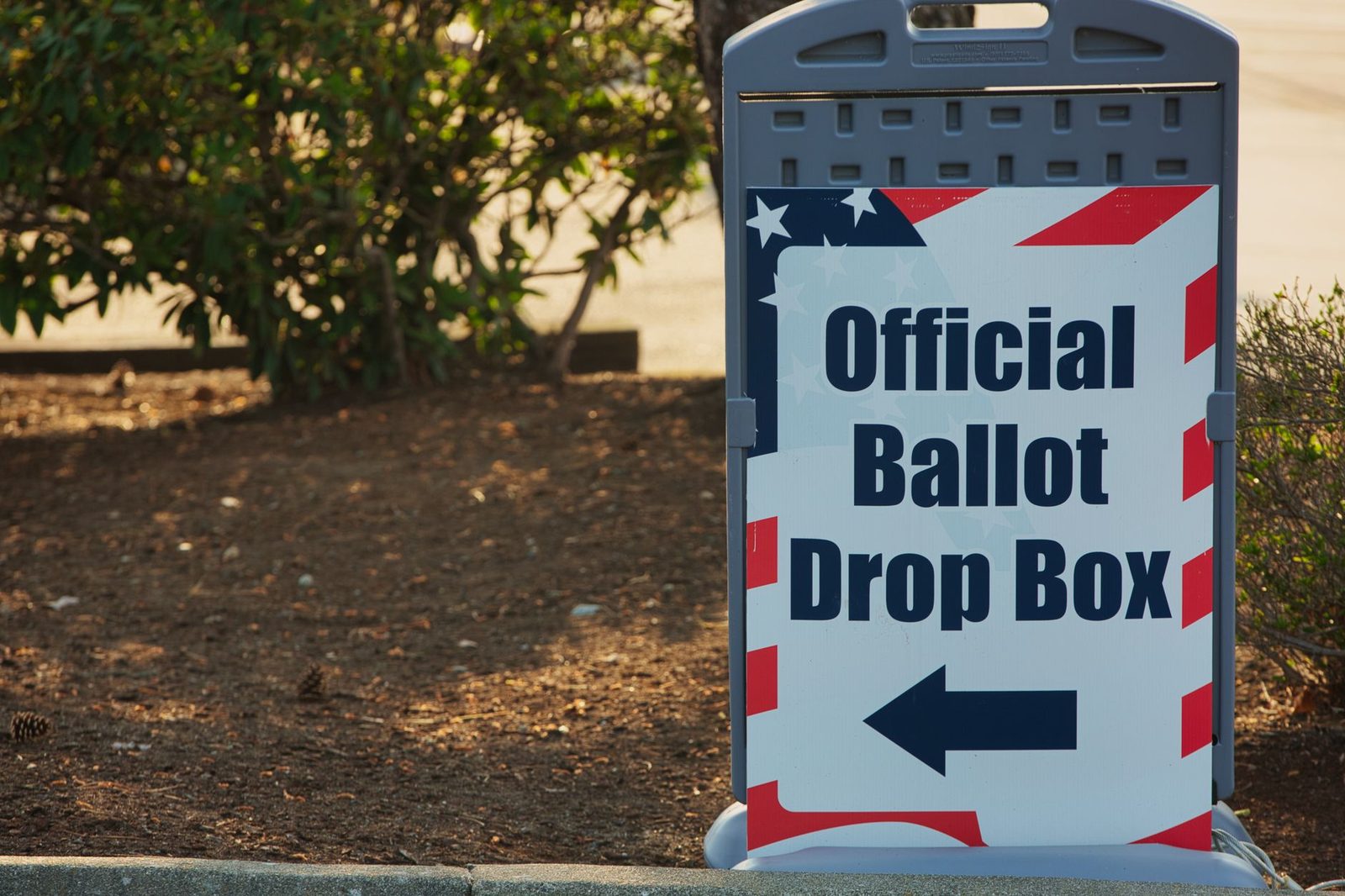
Independent and minor party candidates file a petition of nomination (CAN-44) signed by registered voters of the district equal to 2 percent of the votes cast for secretary of state there at the last general election, with fractions dropped (IC 3-8-6-3). If a town or district lies entirely within one precinct but does not include all of it, the minimum is five signatures (IC 3-8-6-3). The petition is due to the county voter registration office by noon on Wednesday, June 30, 2027. Our guide to running as an independent in Indiana walks through the form, the signatures and the July 15 filing.
Step 5: Campaign in a small electorate
A town council race involves far fewer voters than a citywide race, so a candidate can meet a large share of them in person. Knock on doors in your district, attend town council meetings, and talk with the people who run local organizations. Keep a sign-up sheet with you, so that neighbors who want updates can say so in writing.
Plan around the voter deadlines. For towns with a May 4 primary, voter registration ends on Monday, April 5 and early voting begins on Tuesday, April 6, 2027. For the November 2 election, registration ends on Monday, October 4 and early voting begins on Tuesday, October 5, 2027. Counties may reduce early voting days or hours in a municipal year. Our Indiana 2027 municipal election calendar lists every date in order.
Step 6: Text the neighbors who asked for updates
A short text before early voting or election day keeps the neighbors who signed up informed. Set it up in CampaignCNX+ like this.
- Settle your committee and Campaign Verify. Campaign Verify confirms to the carriers (the mobile phone companies) that a political sender is a real campaign. It needs a 527 committee (the federal tax status of a political committee) with an EIN (the committee's federal tax ID number) and a filing with an election authority that is published online. Check that your committee filing with the county election board is viewable online before you request Campaign Verify, and ask Campaign Verify Support if it is not. Request on or after Sunday, November 15, 2026, so the $95 verification lasts until January 31, 2029. Campaign Verify decides eligibility.
- Register your number. CampaignCNX+ files your carrier registration for you, as 10DLC (the registration for texting from a standard local-style number) or toll-free, and files your Campaign Verify token with it.
- Add only neighbors who agreed in writing. Put them in a group, tag where you met them (for example "doors, District 2" or "fall festival"), and record the consent date and source in a custom field. Do not text people only because they appear on a voter list or signed a petition.
- Schedule a few useful texts. For example, one when early voting opens and one on election day, with the first message ending in "Reply STOP to opt out":
Hi [First name], it's [Name], running for [Town] Town Council. Early voting starts Tue, Oct 5 at the county clerk's office. Reply STOP to opt out.
Texts send only between 8 a.m. and 9 p.m. in the recipient's time zone, and STOP replies are handled automatically. 100 free SMS included. Your number is $5 a month. For texting rules across the region, see campaign texting in the Midwest.
Find out your town's route this week

Call your town clerk-treasurer, ask whether your town holds a primary or a convention, and ask which seats are up. Then mark January 6 and your filing deadline. When you are ready to keep neighbors informed by text, start a CampaignCNX+ trial.