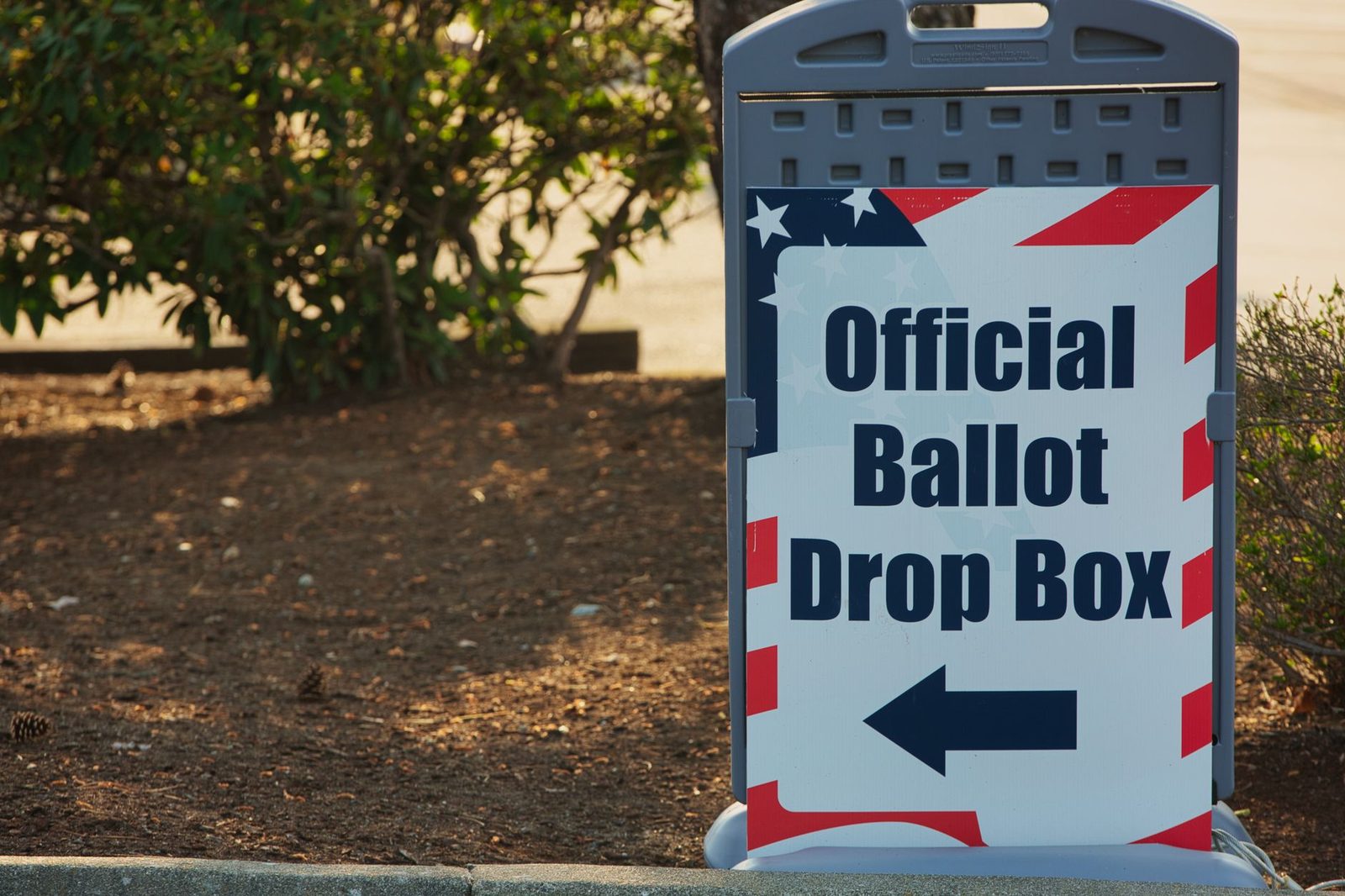
Iowa cities elect council members at the regular city election on Tuesday, November 2, 2027. To run, you must be an eligible elector of the city, and of the ward if you seek a ward seat, both when you file and on election day. You collect signatures on a nomination petition from eligible electors of the city or ward, then file the petition with a notarized affidavit of candidacy at the county auditor's office. In cities with primary provisions, the filing window runs from Monday, August 9 to 5 p.m. on Thursday, August 26, 2027. In all other cities, it runs from Monday, August 23 to 5 p.m. on Thursday, September 16, 2027.
Iowa charges no filing fee, and city elections are nonpartisan. This guide uses the Iowa Code (cited by section) and the Iowa Secretary of State's candidate guides. A 2026 law, House File 2501, made the county auditor the filing office for every city candidate, so older instructions that mention a city clerk no longer apply. Confirm anything specific to your city with your county auditor.
For the full picture of a 2027 Iowa race, including mayor, school board and community college board, see our guide to running for local office in Iowa.
Step 1: Learn how your council is elected
Iowa law lists several forms of city government, including mayor-council, council-manager, commission, home rule charter and special charter (372.1). A newly incorporated city starts with the mayor-council form, which has a mayor and five council members elected at large unless the city changes its representation plan (372.4). Cities may elect some or all council members from wards.
State law sets two-year terms for elective city offices unless state law or the city charter provides otherwise, and a city's voters may change a term to two or four years by petition and special election (376.2). Where council terms are four years and staggered, only some seats are on any one ballot. New terms begin at noon on Monday, January 3, 2028 (based on state law).
Before you decide on a seat, ask your city clerk three questions: which council seats are on the 2027 ballot, whether each is elected at large or by ward, and which ward your home is in.
Step 2: Check that you qualify
How a new number gets approved
- Open your account100 free SMS included
- Buy your number$5 a month. Nothing sends until the account has one.
- Verify your campaignCampaign Verify, $95 per two-year cycle. Needs your committee's EIN and filing.
- We file the registrationToll-free verification, or 10DLC for a local number ($75 one time)
- The carriers review itAbout three business days for a toll-free number
- Send your first textStart with a small test group
Be an eligible elector of the city. A candidate must be an eligible elector of the city when filing and at the election (376.4). An eligible elector meets every requirement to register to vote: a U.S. citizen, an Iowa resident and at least 18, with no unrestored felony conviction, no current court judgment of incompetence to vote, and no claim to vote elsewhere. The Secretary of State's guides say you do not have to be registered, although registering at your current address is still wise.
Live in the ward for a ward seat. A person is not eligible for election from a ward unless they live in the ward when they file the petition and at the election (376.4). An elected official must keep living in the city or ward for the whole term (39.27).
Run for one city office at a time. You may not be a candidate for more than one office at the same election, so you cannot run for both mayor and council. The one exception is a city office together with a school board office, with separate papers for each (49.41).
Step 3: Find out your city's nomination method
Your city's nomination method sets your filing window, your signature number and how the winners are decided (376.6).
- Primary provisions (the default). If more than twice as many candidates file for an office as there are seats, a primary is held on Tuesday, October 5, 2027, and the top vote-getters, up to twice the number of seats, go on the November ballot. Candidates file from August 9 to August 26.
- Runoff provisions. By ordinance, the city holds a runoff instead of a primary. A candidate needs a majority on November 2 to be elected, and seats without enough majority winners go to a runoff on Tuesday, November 30, 2027. Candidates file from August 23 to September 16.
- Chapter 45 nominations. By ordinance, the city has no primary and no runoff. Candidates file from August 23 to September 16, and the candidates with the most votes, up to the number of seats, are elected.
Each city clerk certifies the city's method to the county auditor by Wednesday, August 4, 2027 (based on state law), but you should ask well before then.
Step 4: Collect your signatures

How many. In a city with primary or runoff provisions, you need signatures from eligible electors equal to at least 2 percent of the people who voted for the same office at the last regular city election, and never fewer than 10 (376.4). In a chapter 45 city, the minimum depends on population: 75 in a city of 25,000 or more, 50 in a city of 7,500 to 24,999, 25 in a city of 2,500 to 7,499, and 10 in a city under 2,500 (45.1). As an example only, if 1,500 people voted for a council seat at the last regular city election in a primary city, 2 percent is 30. Ask your county auditor for your number, and collect more, because signatures can be challenged.
Who may sign. If the seat is voted on only by the ward's residents, every signer must live in the ward. If council members must live in a ward but are elected by the whole city, signers may live anywhere in the city. You may sign your own petition, and a person may sign petitions for more than one candidate for the same office.
On paper, with complete lines. Each signer writes a signature (the state guides say it may be printed), a home address with house number, street and city, and the date. A line with only a post office box, a partial address or an address plainly outside the ward or city is not counted (45.5). Fill in the candidate header at the top of every page before anyone signs, including the ward number if the seat has one, because signatures on a page without the required header are not counted.
For a line-by-line walkthrough of the petition page and a plan for collecting door to door, see the Iowa nomination petition guide on Beacon, our canvassing app's site.
Step 5: Complete your affidavit and file with the county auditor
- Fill in the affidavit of candidacy on the Secretary of State's form. Print your name exactly as it should appear on the ballot, with no parentheses, quotation marks or titles. Give your home address, county, the office and the ward, if any. Leave party affiliation blank.
- Sign it before a notary. The county auditor must reject papers whose affidavit lacks your name, the office and ward, your signature or the notary's signature (45.5).
- Bind the petition pages together with staples or in a binder. Unbound pages are returned without examination.
- File the affidavit and petition together with the county auditor by 5 p.m. on the last day of your window. If your city lies in more than one county, file with the auditor of the county with the largest taxable base in the city (47.2). Mailed papers count only if they are received by 5 p.m.
File early, because corrected papers can be filed only before the deadline.
After you file. You may withdraw by Tuesday, September 21, 2027, or by Tuesday, August 31, 2027 in a primary city (both based on state law). Objections to a candidate's papers are due to the county auditor by 5 p.m. on those dates, and a county panel of the auditor, treasurer and county attorney decides them (44.7).
Step 6: Run the council campaign

From the end of filing to election day is 47 days, or 68 days in primary cities. Absentee ballots can be mailed and voted at the county auditor's office as early as Wednesday, October 13, once ballots are ready. Voter registration and absentee applications close at 5 p.m. on Monday, October 18. Polls are open from 7 a.m. to 8 p.m. on Tuesday, November 2. The dates before election day are based on state law, and our Iowa 2027 city and school election calendar lists every date.
For a ward seat, most of the work is meeting voters at their doors, and your petition drive is the first round of those conversations. As an example only, three people who each knock on 60 doors a week for seven weeks would reach about 1,260 doors. For an at-large seat, plan for more volunteers and events, because you are campaigning citywide.
Step 7: Keep supporters informed by text
Set up texting in CampaignCNX+ during the summer, so reminders are ready for absentee voting and election day.
- Settle your committee first. Texting from a registered number for a campaign requires Campaign Verify, a check that confirms to the carriers (the mobile phone companies) that you are a real campaign. It needs a 527 committee (the federal tax status of a political committee) with an EIN (the committee's federal tax ID number) and a filing with an election authority that is published online. Check that your committee's filing is viewable online before you request Campaign Verify, and ask Campaign Verify Support if it is not. A $95 request made on or after Sunday, November 15, 2026 lasts until January 31, 2029. Campaign Verify decides eligibility.
- Open your account. CampaignCNX+ files your carrier registration for you, as 10DLC (the registration for texting from a standard local-style number) or as toll-free, and files your Campaign Verify token with it.
- Add only supporters who agreed in writing, on a dated sign-up sheet that plainly says they agree to receive campaign texts. Signing your petition is not that agreement. Record the consent date and source in a custom field.
- Schedule a reminder for absentee voting, using the first-name merge field:
Hi [First name], this is [Name], candidate for [City] Council. Absentee voting is open at the county auditor's office. Reply STOP to opt out.
Texts send only between 8 a.m. and 9 p.m. in the recipient's time zone, and STOP replies are handled automatically. 100 free SMS included. Your number is $5 a month. For more wording, see our campaign text templates for local races, and for texting rules across the region, see campaign texting in the Midwest.
Get your seat and signatures in order before August

Confirm your seat, ward and nomination method this spring, and line up a notary. When you are ready to keep supporters informed by text, start a CampaignCNX+ trial.